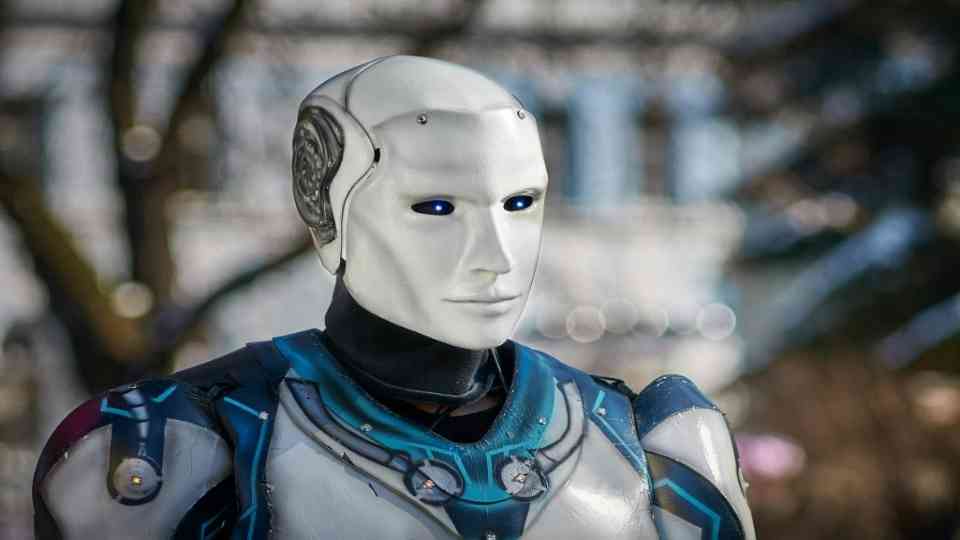
Tesla’s humanoid robot, namely the Optimus, is evolving steadily not just through the use of artificial intelligence, but even implemented through the efforts of human trainers. They are the ones who are teaching how to perform complex, real-world tasks.
Inside Tesla’s robotics division, the famous engineers are also combining human guidance with the concept of machine learning, which would be of great help to Optimus to become more capable, adaptive, and even useful in industrial and household settings.
The Optimus project was first introduced by Elon Musk in 2021, and it also came up with the aim to create a general-purpose humanoid robot. This robot would be capable of handling all the repetitive or dangerous tasks.
While Tesla’s AI technology also helps to give Optimus the ability to analyze visual and spatial data, the company still relies heavily on human-driven training to refine its behavior.
Engineers and trainers are also the people who work alongside the robots, thus helping in demonstrating actions such as picking up objects, folding clothes, or even sorting various components in factories.
These actions are now recorded and even fed into Optimus’s neural network, thus enabling it to learn through imitation and reinforcement.
Tesla’s approach helps to mirror the process that is being used in self-driving car development. In this, the robot learns from massive amounts of real-world data, which are being guided by human corrections and feedback loops.
Over time, Optimus improves its precision and coordination, thus gradually reducing the need for any kind of manual supervision.
The company has already showcased many videos of the robot performing tasks like yoga stretches, even carrying boxes, and also assembling simple mechanical parts.
Elon Musk has also stated that Tesla’s long-term vision is to deploy Optimus in Tesla factories even before eventually offering it for any kind of consumer use.