An apparently casual evening outing of Jensen Huang, the CEO of Nvidia, caused a rather astonishing response in the stock market of South Korea, but this time, it was the fried chicken industry that was responding.
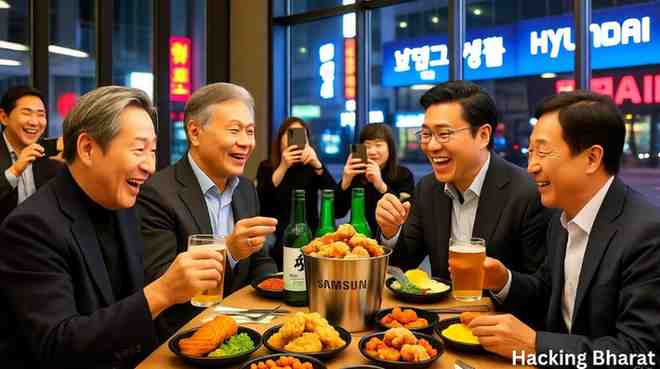
Huang was spotted eating with Lee Jae-yong (Chairman of Samsung Electronics) and Chung Euisun (Executive Chair of Hyundai Motor Group) in a local fried chicken restaurant, and the next day the stock of one competitor chicken spot leaped approximately 20 percent.
The Gangnam dinner, which happened in Gangnam, went viral when photos of the high profile trio having dinner together with chimaek (fried chicken + beer) got on the internet.
They were also said to have wasted some time gossiping, laughing, and even covering bills of several other diners, a move that had attracted the media and people as well.
Their visited restaurant is not publicly traded, but its competitor, Kyochon F&B, experienced a huge rise in its stock based on the premise that the outing was not merely a meal but rather something more.
Huang Effect and Market Reaction
The phenomenon, so called the Huang Effect, shows the disproportionate impact that tech leaders now have on non-tech markets.
These are some of the transactions that led to the interpretation by some traders that the reason Huang and the billionaires casually ate fried chicken was because they had supplying or marketing connections with the food business.
The shares at Kyochon soared almost 20 percent in just one day, and other companies dealing with chicken also experienced massive increases in the trade volume.
Although no official tie up was announced between Nvidia, Samsung, or Hyundai and the chain of chicken restaurants, the optics sent trading into a frenzy.
The presence of a significant increase in a chicken processor company and a machine that makes chicken frying robots were also noticeable sprouts and highlight the rapid expansion of the investor mood when the technology giants appear in the unlikely locations.
This is not a market phenomenon. It makes a point of how action taken symbolically by powerful people could trickle across markets that are completely unrelated to their primary business.
Some key takeaways:
- Such leaders in the tech industry as Jensen Huang are no longer viewed as business executives but as brand and market influencers who can trigger investor responses with every move they make.
- Markets have become very receptive to any kind of signal, whether informal or not, portraying the increased volatility and speculative nature in global equities.
- In industries and markets where there are high profile personalities, such as food or retail or services, the high profile created by high-profile personalities can lead to a loss or gain in valuation in the short term, without necessarily having fundamentals to support that level of valuation.
Things to Keep in Mind
- As Kyochon has impressed stock gains, it is possible that these are temporary in nature and the gains are speculative, given that the company did not report any new transaction with Huang or his partners.
- When reacting to such events, investors need to keep in mind that investors should still focus on fundamentals and not on viral dinners to drive long-term value.
- Such market moves can be subject to pressure on regulatory and governance structures when hype rather than business is running them.
Turning a casual fried chicken dinner in Seoul into a financial news item illustrates that interdependence of social events, technology executive ship, and markets has existed.
Whether this ripple effect will be a permanent one is yet to be witnessed however, at this point, it is a clear reminder that in this modern world, a bite of chicken with billionaires could set the markets moving.